
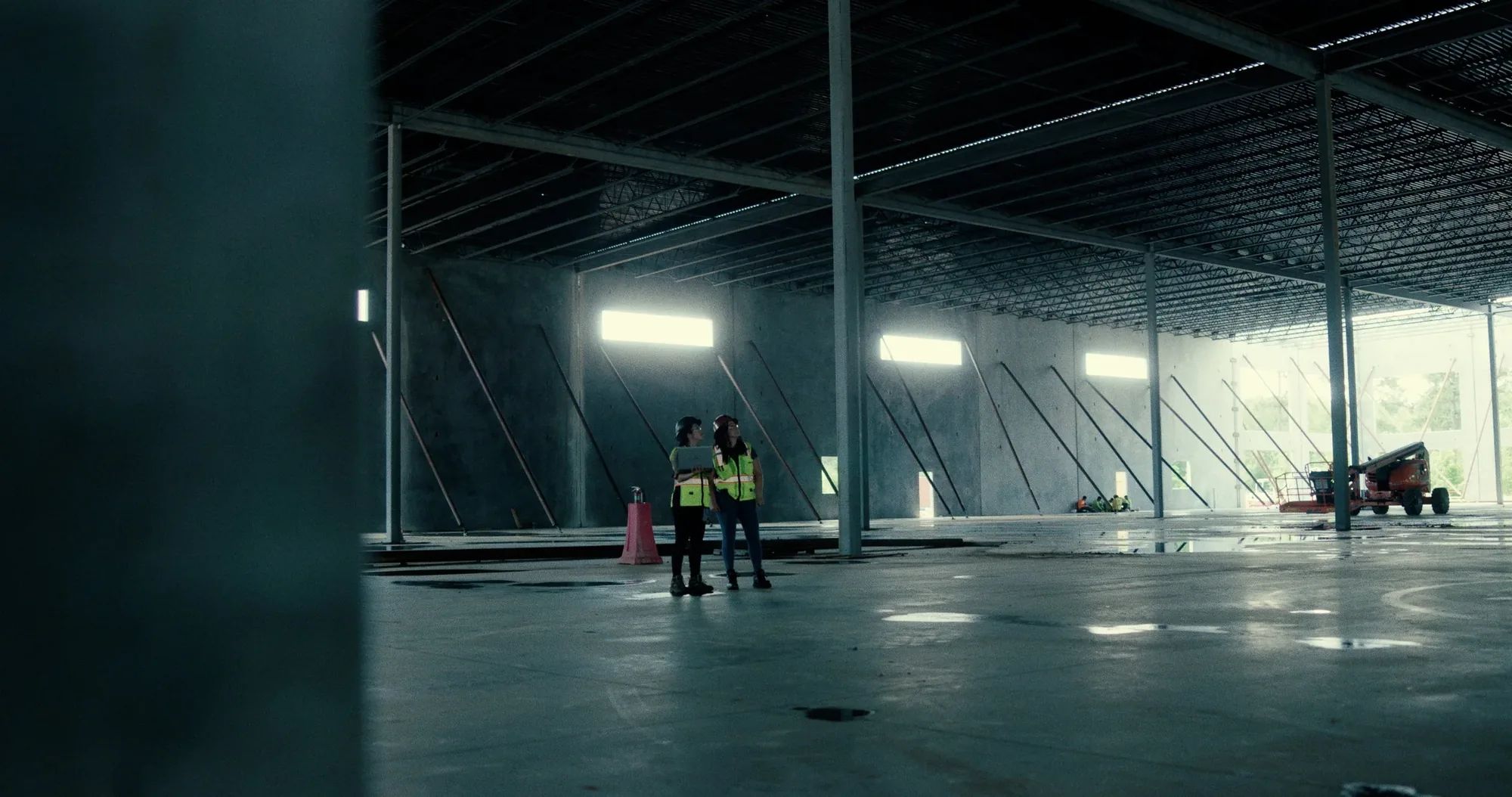
For commercial contractors
Where does the work get stuck?
Between the systems you already run. The PM platform, the accounting system, the estimating tool, the field app, the spreadsheet. We connect them, build what's missing, and make sure it holds up. So your team can take on more work without adding people.
An integration, an automation, a custom tool, an AI agent where it earns its keep. Whatever the job calls for.
Your people are the integration.
Illustration: work enters at estimating and moves through the spreadsheet, the PM platform, an AI tool and accounting. Between each pair, small figures pick it up by hand and carry it to the next system. One person at the spreadsheet to PM platform handoff checks every unit, so work piles up there and backs up toward estimating, while further down the line someone sets up a lawn chair and waits for work to arrive.
The schedule lives in the PM platform. The budget lives in accounting. The sub's number is in an email, the owner's answer was a phone call, and the field is a day ahead of the office. None of it talks to the rest. So a person carries it across: re-typing, forwarding, chasing, checking. Nobody planned it that way. It piled up, one workaround at a time.
Every hour your people are the integration is an hour not spent on jobs only they can do. And the usual answer, hire another coordinator, is just one more person carrying data between systems, and another to manage. We make sure your tech is carrying its weight, and then you can hire with confidence.
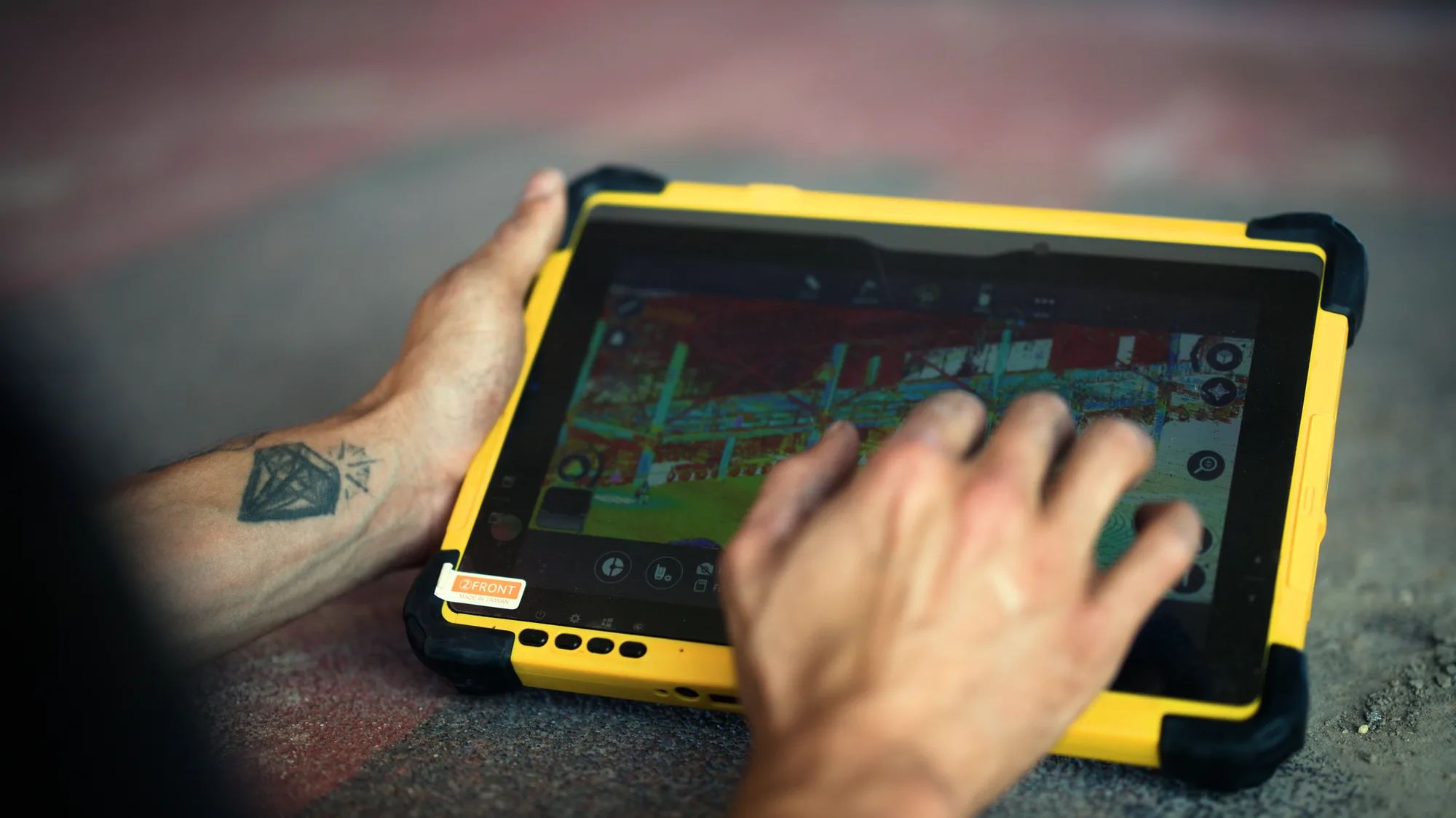
No two contractors operate the same way.
No two contractors run the same tech. Your platforms were built for every contractor at once, and none of them were built to talk to each other. That's why off-the-shelf won't fix it.
We make your tech work the way you do.
Build what's missing.
The workflow nobody has a screen for. The report someone builds by hand every Monday. The piece that turns ten places into one answer. If no platform sells it, we build it, and it fits the way your team already works.
Connect your tech.
The PM platform to accounting. The estimate to the schedule. The drawings to the job folder. The field app to the office. The systems that are working stay where they are. We build the connections between them so data moves once, in the right direction, without a person in the middle.
Illustration: the PM's change-order spreadsheet, CO_log_FINAL_v3.xlsx, with a #REF! error, mixed status spellings and copies in other tabs, is rebuilt into a purpose-built change-order tool. The spreadsheet row for CO-014, sprinkler reroute L3, $42,300, pending, lifts out and its cells move into the new tool's fields, which at first hold only what the spreadsheet knew. Then seven tools (the PM software, a meeting recording, a notetaker summary, an AI tool, an email, a file share and the ERP) are wired into the tool, and their data fills and corrects the record: CO-014, a sprinkler main reroute on the level 3 corridor, caused by a concealed condition found at demo. The price changes from the spreadsheet's $42,300 to $53,625 to the owner. Verbal OK only up to $50,000, so written approval is needed. Nothing committed in the ERP yet. Next action: the PM sends the revised PCO to the owner's rep for signature by Friday and holds the sub CO in the ERP until it's signed. Each field is logged, and the tool shows as live, version 1.4, in month 12.
Maintain it.
Anything that touches money, scope, or a contract gets a person's approval before it moves. Every step is logged. We monitor it, we maintain it, and we answer for it in month twelve the same as month one.
We make work flow.
Yes, we build AI agents. When and where it makes sense.
When the job calls for an agent, we build the agent: reading the submittal, drafting the RFI, sorting the inbox, flagging the number that doesn't match. When plain automation or a cleaner process does the job better, we'll tell you, and we'll build that instead. We build to what gets you the right outcome.
Illustration: an agent console for job 2417, the level 3 renovation, works through four tasks in turn. It reads the fire protection sub's sprinkler shop drawing submittal and pulls out who sent it, what it is, the area and that the main is rerouted around the new corridor wall. It drafts RFI-031 to the architect about the sprinkler main where the new corridor wall goes. It sorts four new emails into submittals, RFIs, change orders and field. It checks PCO-014 and flags that the $46,530 draft doesn't match the sub's rev 2 price of $48,750, and that rev 2 plus the fee is $53,625, over the $50,000 verbal OK. Each task stops at Needs review until the PM approves it, and nothing goes out before that.
Three steps.
A set price to build it. A monthly fee to keep it running.
Workflow Sprint.
We map one workflow end to end, find where it breaks between systems, and we build the prototype. You see what the fix looks like and what it's worth in hours before you commit to the full build.
Implementation.
We build the real thing, connect it to the systems you already run, test it with your team, and train the people who'll use it every day.
Management.
Hosting, monitoring, updates, backups, and a support line when something breaks. Nobody on your team inherits a new job.
Questions you're probably asking
“We already have AI in our platform.”
Good. Keep it. It works on what's inside that platform. Most of what slows your team down is between it and everything else, and that's the part we connect. Your platform's AI gets better when the data underneath it is complete.
“We don't have time for this.”
You won't run it. We schedule the interviews, write the agendas, track the decisions, and bring you one consolidated list of things to approve. You'll know the time commitment before we start.
“Is our data still ours?”
Yes. Ownership, access, and export terms are in writing before we build anything. Everything runs under your accounts and your credentials. You can leave with everything you came with.
“What does I.T. need to know?”
We bring I.T. in early with an architecture brief, a security checklist, and agreed review checkpoints. Nothing goes live they haven't signed off on.
“How do we know it's worth it?”
We baseline the workflow first (how long it takes, how often it runs) and build the benefit math with the assumptions showing. If the numbers don't work, we tell you.
“Do we end up with ten little tools?”
No. Each piece connects to the last. What you end up with is your existing systems, finally working as one.
“Is AI even the right answer here?”
Often it's not. We test each task against AI, plain automation, and a simple process change, and pick the most dependable one. Where AI is involved, a person approves before anything goes out.

Already built something?
Somebody on your team has a tool running on a spreadsheet, a script, ChatGPT, or something they vibe-coded over a weekend. It works. Until that person is out.
That counts as what works. We'll take it the rest of the way: connect it to the systems it should have been talking to all along, harden it, and get it deployed to the whole team so it survives the person who built it. Or, if you'd rather own the whole thing, we'll build it and hand your team the keys with the training to run it.
Why FieldProof
Fifteen years in construction. Then FieldProof. Modeled it. Managed it. Fabricated it.
So everything we build starts with how work actually moves through a construction company, not how a software company thinks it should.
- We know what it's like to stay late getting a submittal out the door, and why nobody reads the SOP.
- We answer for it after launch. What works in month one still works in month twelve.